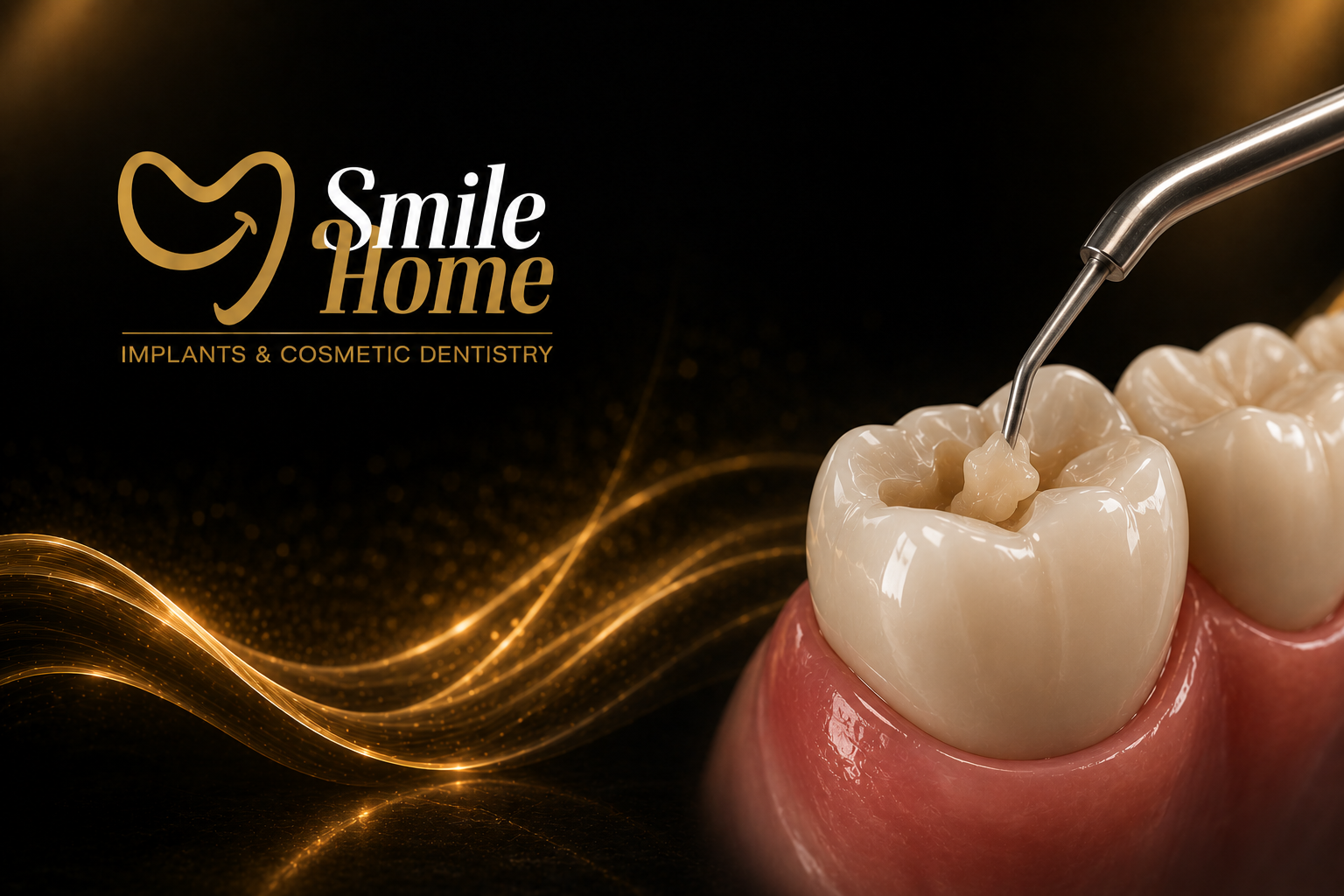

Dental Fillings are restorative treatments used to repair teeth affected by decay, fractures, wear, or cosmetic imperfections. The main goal of fillings is to restore the tooth’s natural shape, strength, and function while preventing further damage or infection.
Modern dentistry offers different types of filling materials, each selected based on the tooth condition, location, and aesthetic requirements. These include composite fillings, glass ionomer fillings, composite veneers, and EverX fiber-reinforced fillings.
Composite fillings are tooth-colored restorations used to repair cavities and minor tooth damage. They blend naturally with the tooth structure, making them ideal for both front and back teeth. The material is placed in layers and hardened with a special light to achieve strong bonding and a natural appearance.
Glass ionomer fillings (GIC) are restorative materials that chemically bond to the tooth and release fluoride over time. They are commonly used in children’s teeth, near the gum line, or in areas with lower biting pressure. They help protect the tooth from future decay and are often used as a preventive restorative option.
Composite veneers are a cosmetic treatment where tooth-colored resin is directly applied to the tooth surface to improve its shape, color, and alignment. They are a minimally invasive and cost-effective way to enhance the smile, often completed in a single visit.
EverX fillings are fiber-reinforced composite restorations designed for large cavities and weakened teeth. They contain short glass fibers that strengthen the tooth from inside and reduce the risk of fracture. They are often used as a base layer under composite restorations in heavily damaged teeth.
Dental fillings are essential for restoring damaged teeth, preventing further decay, and improving both function and aesthetics. With proper care and hygiene, they can last for many years and help maintain a healthy smile.